
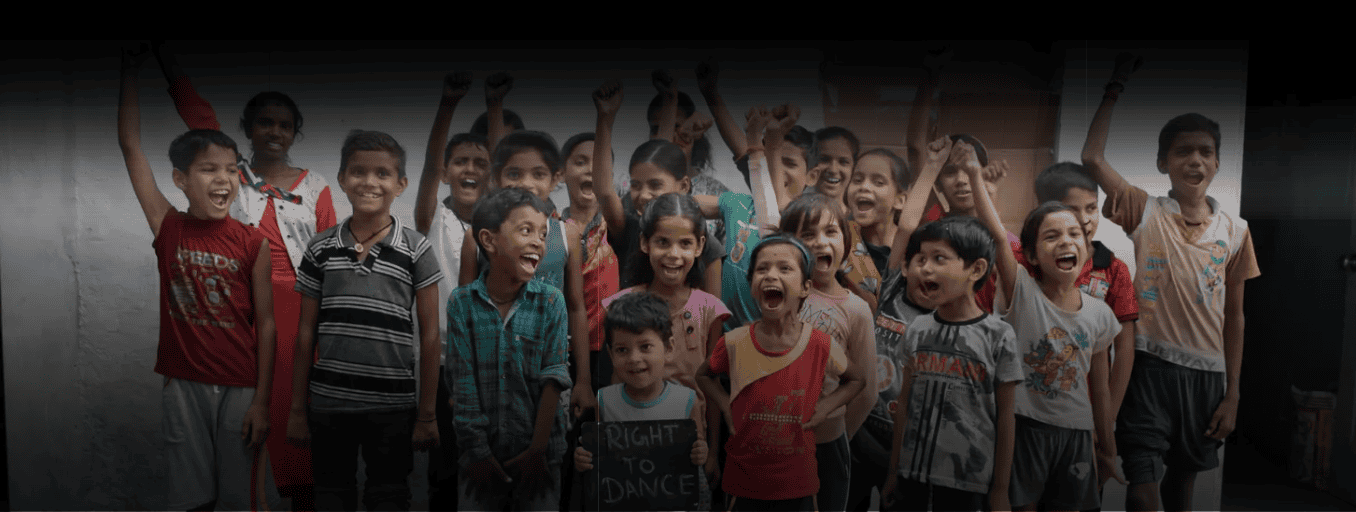
Teach excellent dance. Build agency. Protect dignity.
We believe that when children practise a demanding art form regularly, in a safe space, with skilled adults who take them seriously, they build abilities that matter beyond the studio. This page sets out what we do, what we expect to change, and what we are still finding out.
Children in underserved urban communities are rarely offered sustained, high-quality arts training. Where it exists, it is usually paid, irregular or a one-off event. Talent and interest are common; access is not.
Free means no fee is charged. It does not mean attendance, punctuality, effort or conduct are optional.
Our experience over ten years points to five conditions that matter:
We observe growth in six areas, against defined indicators, on a four-level scale.
Craft: safe use of the body; rhythm and memory; working in space and as an ensemble.
Agency: taking part safely and coming back after a setback; using one’s voice and respecting boundaries; collaboration and reliability.
These are hypotheses, not results. Many things shape a child’s life, so we speak of contribution, not attribution.
For ten years we recorded what we did and what we saw, but not how change happened. We are now preparing a study in Delhi with current and former learners. It will explore how participants describe change, non-change and the conditions they associate with each. What we learn will shape our curriculum.
Participants, and any research partners, will see the findings before anyone else; we will then publish a summary.
We are dance educators, not therapists, and our classes are not therapy. Dance Out of Poverty is the name of our programme, not a promise that dance alone lifts a family out of poverty. Our approach is evidence-informed: it draws on research and on our own practice, and we say clearly where the evidence is still thin.

Built on the principles of social justice, equity and empathy, Sinhayana Foundation works alongside communities that are systematically marginalised.
© 2026 Sinhayana Foundation. All rights reserved. CIN U74999DL2017NPL320932
Built on the principles of social justice, equity and empathy, Sinhayana Foundation works alongside communities that are systematically marginalised.
© 2026 Sinhayana Foundation. All rights reserved. CIN U74999DL2017NPL320932